
Introduction
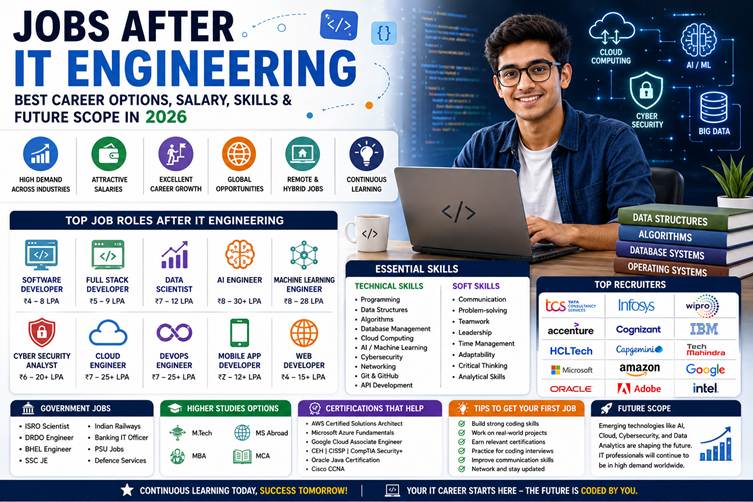
Completing an Information Technology (IT) Engineering degree is a major milestone that opens the door to countless career opportunities. As businesses across industries continue to embrace digital transformation, the demand for skilled IT professionals is growing faster than ever. From software development and cybersecurity to artificial intelligence and cloud computing, IT engineers have access to some of the highest-paying and fastest-growing careers in today’s job market.
However, many graduates often wonder, “What are the best jobs after IT Engineering?” With so many career paths available, choosing the right one can feel overwhelming. Some students prefer joining multinational companies, while others aim for government jobs, higher studies, or entrepreneurial ventures. The right career choice depends on your interests, technical skills, career goals, and willingness to keep learning in an ever-evolving technology landscape.
The good news is that an IT Engineering degree provides a strong foundation in programming, networking, databases, software engineering, operating systems, and emerging technologies. These skills make graduates valuable across industries such as IT services, finance, healthcare, e-commerce, manufacturing, education, telecommunications, and consulting.
In this comprehensive guide, you’ll discover the best jobs after IT Engineering, salary expectations, required skills, top recruiters, career growth opportunities, and practical tips to help you build a successful career in 2026 and beyond.
Whether you’re a final-year student, a recent graduate, or someone planning your future after IT Engineering, this guide will help you make an informed career decision.
Why IT Engineering Is One of the Best Career Choices
Information Technology has become the backbone of modern businesses. Organizations rely on IT professionals to develop software, secure digital systems, manage data, automate business processes, and build innovative solutions that improve productivity.
The increasing adoption of technologies such as Artificial Intelligence (AI), Machine Learning (ML), Cloud Computing, Big Data, Blockchain, and the Internet of Things (IoT) has significantly expanded career opportunities for IT engineers.
Some key reasons why IT Engineering remains a promising career include:
- High demand across industries
- Attractive salary packages
- Excellent career growth
- Global employment opportunities
- Remote and hybrid work options
- Continuous learning and innovation
- Multiple specialization choices
- Strong freelancing opportunities
These advantages make IT Engineering one of the most rewarding degrees for students interested in technology and problem-solving.
Best Jobs After IT Engineering
Graduates can choose from numerous technical and non-technical career options depending on their interests and expertise.
1. Software Developer
Software Developers design, develop, test, and maintain applications that solve real-world problems. They work on desktop software, web applications, enterprise systems, and mobile apps.
Responsibilities
- Writing clean and efficient code
- Developing software solutions
- Debugging applications
- Collaborating with development teams
- Maintaining existing software
- Testing and deployment
Skills Required
- Java
- Python
- C++
- JavaScript
- SQL
- Git
- Object-Oriented Programming
- Problem-solving
Average Salary (India)
- Freshers: ₹4–8 LPA
- Experienced Professionals: ₹10–30+ LPA
2. Full Stack Developer
Full Stack Developers work on both frontend and backend development, making them highly valuable for startups and established companies alike.
Technologies
Frontend:
- HTML
- CSS
- JavaScript
- React
- Angular
Backend:
- Node.js
- Java
- Python
- PHP
- .NET
Database:
- MySQL
- PostgreSQL
- MongoDB
Salary
- Freshers: ₹5–9 LPA
- Experienced: ₹12–35 LPA
3. Data Scientist
Data Scientists analyze large datasets to uncover trends and generate insights that help organizations make informed business decisions.
Daily Responsibilities
- Data collection
- Data cleaning
- Machine Learning model development
- Data visualization
- Predictive analytics
Essential Skills
- Python
- R
- SQL
- Statistics
- Machine Learning
- Deep Learning
- Tableau
- Power BI
Average Salary
- Freshers: ₹7–12 LPA
- Experienced: ₹18–45+ LPA
Data Science remains one of the highest-paying jobs after IT Engineering.
4. Artificial Intelligence Engineer
AI Engineers develop intelligent systems capable of learning, decision-making, and automation.
Popular Applications
- Chatbots
- Recommendation systems
- Self-driving technology
- Image recognition
- Natural Language Processing
Skills
- Python
- TensorFlow
- PyTorch
- Machine Learning
- Deep Learning
- Mathematics
- Neural Networks
Salary
₹8–30+ LPA
Demand for AI professionals continues to grow rapidly worldwide.
5. Machine Learning Engineer
Machine Learning Engineers build algorithms that enable software systems to improve automatically using data.
Responsibilities
- Building ML models
- Feature engineering
- Model optimization
- Data preprocessing
- Performance evaluation
Required Skills
- Python
- Scikit-learn
- TensorFlow
- Statistics
- Data Structures
- Algorithms
Salary
₹8–28 LPA
6. Cybersecurity Analyst
With increasing cyber threats, organizations require skilled professionals to secure sensitive information and digital infrastructure.
Responsibilities
- Security monitoring
- Threat detection
- Incident response
- Vulnerability assessment
- Ethical hacking
- Risk management
Certifications
- CEH
- CompTIA Security+
- CISSP
Salary
₹6–20+ LPA
Cybersecurity is among the fastest-growing career options after IT Engineering.
7. Cloud Engineer
Cloud Engineers design and maintain cloud infrastructure using platforms such as AWS, Microsoft Azure, and Google Cloud.
Responsibilities
- Cloud deployment
- Infrastructure automation
- Cloud security
- Performance optimization
- Disaster recovery
Skills
- AWS
- Azure
- GCP
- Docker
- Kubernetes
- Linux
Salary
₹7–25+ LPA
8. DevOps Engineer
DevOps Engineers bridge the gap between software development and IT operations.
Work
- CI/CD implementation
- Infrastructure automation
- Monitoring
- Deployment pipelines
- Containerization
Popular Tools
- Jenkins
- Docker
- Kubernetes
- GitHub
- Terraform
- Ansible
Salary
₹7–22+ LPA
9. Mobile App Developer
Smartphone usage continues to increase, creating strong demand for mobile application developers.
Platforms
- Android
- iOS
- Cross-platform
Technologies
- Kotlin
- Swift
- Flutter
- React Native
Salary
₹5–18+ LPA
10. Web Developer
Web Developers create responsive, secure, and user-friendly websites.
Skills
- HTML
- CSS
- JavaScript
- PHP
- React
- WordPress
- APIs
Salary
₹4–15+ LPA
11. Database Administrator (DBA)
Database Administrators manage organizational databases to ensure performance, security, and reliability.
Responsibilities
- Backup management
- Query optimization
- Database security
- Performance tuning
- Disaster recovery
Salary
₹5–18+ LPA
12. Network Engineer
Network Engineers build and maintain communication networks within organizations.
Responsibilities
- Router configuration
- Network troubleshooting
- Firewall management
- LAN/WAN management
- Network security
Salary
₹4–15+ LPA
13. Systems Engineer
Systems Engineers integrate hardware, software, and networking solutions to build efficient IT systems.
Salary
₹5–16+ LPA
14. Business Analyst
Business Analysts connect business needs with technology solutions.
Responsibilities
- Requirement gathering
- Process improvement
- Stakeholder communication
- Data analysis
- Documentation
Salary
₹6–18+ LPA
15. UI/UX Designer
Students interested in creativity can pursue UI/UX design.
Skills
- Figma
- Adobe XD
- User Research
- Wireframing
- Prototyping
Salary
₹5–18+ LPA
Government Jobs After IT Engineering
Many graduates prefer government jobs because they offer stability, attractive salaries, and additional benefits.
Popular government career options include:
- ISRO Scientist
- DRDO Engineer
- BHEL Engineer
- NIC Scientist
- GATE-based PSU Jobs
- Indian Railways
- SSC JE
- Banking IT Officer
- State Government IT Departments
- Defence Services Technical Entry
Government jobs often require candidates to clear competitive examinations and meet specific eligibility criteria.
Private Sector Jobs After IT Engineering
Private companies offer excellent growth opportunities, competitive salaries, and exposure to the latest technologies.
Some of the top recruiters include:
- TCS
- Infosys
- Wipro
- Accenture
- Cognizant
- IBM
- Capgemini
- HCLTech
- Tech Mahindra
- Oracle
- Microsoft
- Amazon
- Adobe
- Intel
- NVIDIA
Fresh graduates can begin their careers through campus placements, internships, off-campus hiring drives, or referral programs.
Highest Paying Jobs After IT Engineering
Some IT roles consistently offer excellent salary packages because of their high demand and specialized skill requirements.
Top-paying careers include:
- AI Engineer
- Data Scientist
- Machine Learning Engineer
- Cloud Architect
- Cybersecurity Expert
- DevOps Engineer
- Solutions Architect
- Blockchain Developer
- Software Architect
- Site Reliability Engineer (SRE)
These careers often require advanced technical knowledge, certifications, and continuous upskilling.
Essential Skills to Get a Good Job After IT Engineering
Technical skills alone are not enough in today’s competitive job market. Employers also value communication, teamwork, and adaptability.
Technical Skills
- Programming
- Data Structures
- Algorithms
- Database Management
- Cloud Computing
- AI and Machine Learning
- Cybersecurity
- Networking
- Git and GitHub
- API Development
Soft Skills
- Communication
- Leadership
- Problem-solving
- Teamwork
- Time management
- Critical thinking
- Adaptability
- Analytical skills
Developing both technical and interpersonal skills significantly improves employability.
Certifications That Can Boost Your Career
Professional certifications help validate your expertise and improve job prospects.
Some valuable certifications include:
- AWS Certified Solutions Architect
- Microsoft Azure Fundamentals
- Google Cloud Associate Engineer
- Cisco CCNA
- CEH
- CompTIA Security+
- Oracle Java Certification
- Microsoft Power BI
- Google Data Analytics
- Red Hat Certified System Administrator
Choosing certifications aligned with your desired career path can increase your chances of securing higher-paying roles.
Higher Studies After IT Engineering
Some graduates choose to continue their education to specialize further or improve career opportunities.
Popular options include:
- M.Tech
- MBA
- MS Abroad
- MCA
- PG Diploma in AI
- PG Diploma in Data Science
- Cybersecurity Programs
- Cloud Computing Courses
Higher education can open doors to research, management positions, and specialized technical roles.
Tips to Get Your First Job After IT Engineering
Landing your first job requires more than just a degree. A strategic approach can make you stand out in a competitive job market.
Here are some practical tips:
- Build strong programming skills.
- Create real-world projects and upload them to GitHub.
- Develop an impressive resume tailored to each job role.
- Practice coding on platforms like LeetCode and HackerRank.
- Gain internship experience whenever possible.
- Learn in-demand technologies such as AI, Cloud Computing, and Cybersecurity.
- Earn industry-recognized certifications.
- Improve communication and interview skills.
- Stay active on LinkedIn and build a professional network.
- Participate in hackathons, coding competitions, and open-source projects.
Consistent learning and hands-on experience can significantly improve your chances of securing a rewarding job.
Conclusion
An IT Engineering degree offers far more than a traditional software development career. Today’s technology landscape provides opportunities in artificial intelligence, cloud computing, cybersecurity, data science, mobile app development, DevOps, business analytics, networking, and many other specialized fields. Whether you choose to work for a multinational company, prepare for a government job, pursue higher studies, or launch your own technology startup, the possibilities are vast.
Success after IT Engineering depends on continuously upgrading your skills, gaining practical experience, and staying informed about industry trends. Employers value candidates who combine strong technical knowledge with communication, problem-solving, and teamwork skills.
Instead of focusing solely on finding a job, aim to build a long-term career by learning emerging technologies, earning relevant certifications, and working on real-world projects. The IT industry continues to evolve rapidly, creating exciting opportunities for professionals who are willing to adapt and grow.
With the right skills, determination, and learning mindset, you can build a successful and rewarding career after IT Engineering and thrive in the digital economy of 2026 and beyond.
Jobs After IT Engineering: Best Career Options, Salary, Skills & Future Scope in 2026
Introduction
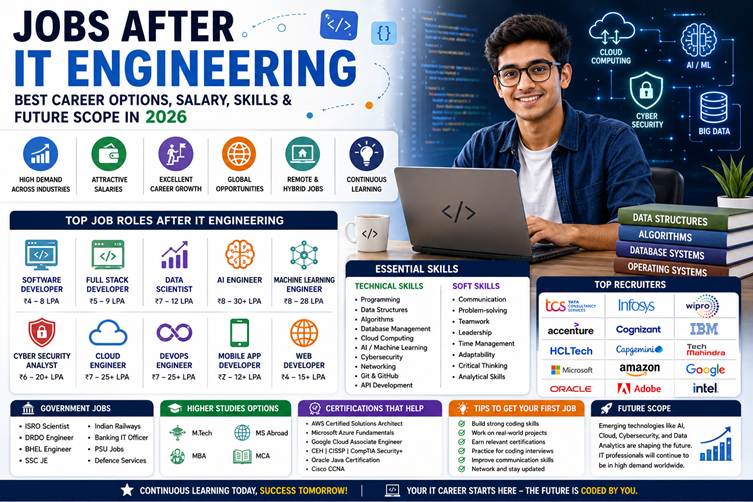
Completing an Information Technology (IT) Engineering degree is a major milestone that opens the door to countless career opportunities. As businesses across industries continue to embrace digital transformation, the demand for skilled IT professionals is growing faster than ever. From software development and cybersecurity to artificial intelligence and cloud computing, IT engineers have access to some of the highest-paying and fastest-growing careers in today’s job market.
However, many graduates often wonder, “What are the best jobs after IT Engineering?” With so many career paths available, choosing the right one can feel overwhelming. Some students prefer joining multinational companies, while others aim for government jobs, higher studies, or entrepreneurial ventures. The right career choice depends on your interests, technical skills, career goals, and willingness to keep learning in an ever-evolving technology landscape.
The good news is that an IT Engineering degree provides a strong foundation in programming, networking, databases, software engineering, operating systems, and emerging technologies. These skills make graduates valuable across industries such as IT services, finance, healthcare, e-commerce, manufacturing, education, telecommunications, and consulting.
In this comprehensive guide, you’ll discover the best jobs after IT Engineering, salary expectations, required skills, top recruiters, career growth opportunities, and practical tips to help you build a successful career in 2026 and beyond.
Whether you’re a final-year student, a recent graduate, or someone planning your future after IT Engineering, this guide will help you make an informed career decision.
Why IT Engineering Is One of the Best Career Choices
Information Technology has become the backbone of modern businesses. Organizations rely on IT professionals to develop software, secure digital systems, manage data, automate business processes, and build innovative solutions that improve productivity.
The increasing adoption of technologies such as Artificial Intelligence (AI), Machine Learning (ML), Cloud Computing, Big Data, Blockchain, and the Internet of Things (IoT) has significantly expanded career opportunities for IT engineers.
Some key reasons why IT Engineering remains a promising career include:
- High demand across industries
- Attractive salary packages
- Excellent career growth
- Global employment opportunities
- Remote and hybrid work options
- Continuous learning and innovation
- Multiple specialization choices
- Strong freelancing opportunities
These advantages make IT Engineering one of the most rewarding degrees for students interested in technology and problem-solving.
Best Jobs After IT Engineering
Graduates can choose from numerous technical and non-technical career options depending on their interests and expertise.
1. Software Developer
Software Developers design, develop, test, and maintain applications that solve real-world problems. They work on desktop software, web applications, enterprise systems, and mobile apps.
Responsibilities
- Writing clean and efficient code
- Developing software solutions
- Debugging applications
- Collaborating with development teams
- Maintaining existing software
- Testing and deployment
Skills Required
- Java
- Python
- C++
- JavaScript
- SQL
- Git
- Object-Oriented Programming
- Problem-solving
Average Salary (India)
- Freshers: ₹4–8 LPA
- Experienced Professionals: ₹10–30+ LPA
2. Full Stack Developer
Full Stack Developers work on both frontend and backend development, making them highly valuable for startups and established companies alike.
Technologies
Frontend:
- HTML
- CSS
- JavaScript
- React
- Angular
Backend:
- Node.js
- Java
- Python
- PHP
- .NET
Database:
- MySQL
- PostgreSQL
- MongoDB
Salary
- Freshers: ₹5–9 LPA
- Experienced: ₹12–35 LPA
3. Data Scientist
Data Scientists analyze large datasets to uncover trends and generate insights that help organizations make informed business decisions.
Daily Responsibilities
- Data collection
- Data cleaning
- Machine Learning model development
- Data visualization
- Predictive analytics
Essential Skills
- Python
- R
- SQL
- Statistics
- Machine Learning
- Deep Learning
- Tableau
- Power BI
Average Salary
- Freshers: ₹7–12 LPA
- Experienced: ₹18–45+ LPA
Data Science remains one of the highest-paying jobs after IT Engineering.
4. Artificial Intelligence Engineer
AI Engineers develop intelligent systems capable of learning, decision-making, and automation.
Popular Applications
- Chatbots
- Recommendation systems
- Self-driving technology
- Image recognition
- Natural Language Processing
Skills
- Python
- TensorFlow
- PyTorch
- Machine Learning
- Deep Learning
- Mathematics
- Neural Networks
Salary
₹8–30+ LPA
Demand for AI professionals continues to grow rapidly worldwide.
5. Machine Learning Engineer
Machine Learning Engineers build algorithms that enable software systems to improve automatically using data.
Responsibilities
- Building ML models
- Feature engineering
- Model optimization
- Data preprocessing
- Performance evaluation
Required Skills
- Python
- Scikit-learn
- TensorFlow
- Statistics
- Data Structures
- Algorithms
Salary
₹8–28 LPA
6. Cybersecurity Analyst
With increasing cyber threats, organizations require skilled professionals to secure sensitive information and digital infrastructure.
Responsibilities
- Security monitoring
- Threat detection
- Incident response
- Vulnerability assessment
- Ethical hacking
- Risk management
Certifications
- CEH
- CompTIA Security+
- CISSP
Salary
₹6–20+ LPA
Cybersecurity is among the fastest-growing career options after IT Engineering.
7. Cloud Engineer
Cloud Engineers design and maintain cloud infrastructure using platforms such as AWS, Microsoft Azure, and Google Cloud.
Responsibilities
- Cloud deployment
- Infrastructure automation
- Cloud security
- Performance optimization
- Disaster recovery
Skills
- AWS
- Azure
- GCP
- Docker
- Kubernetes
- Linux
Salary
₹7–25+ LPA
8. DevOps Engineer
DevOps Engineers bridge the gap between software development and IT operations.
Work
- CI/CD implementation
- Infrastructure automation
- Monitoring
- Deployment pipelines
- Containerization
Popular Tools
- Jenkins
- Docker
- Kubernetes
- GitHub
- Terraform
- Ansible
Salary
₹7–22+ LPA
9. Mobile App Developer
Smartphone usage continues to increase, creating strong demand for mobile application developers.
Platforms
- Android
- iOS
- Cross-platform
Technologies
- Kotlin
- Swift
- Flutter
- React Native
Salary
₹5–18+ LPA
10. Web Developer
Web Developers create responsive, secure, and user-friendly websites.
Skills
- HTML
- CSS
- JavaScript
- PHP
- React
- WordPress
- APIs
Salary
₹4–15+ LPA
11. Database Administrator (DBA)
Database Administrators manage organizational databases to ensure performance, security, and reliability.
Responsibilities
- Backup management
- Query optimization
- Database security
- Performance tuning
- Disaster recovery
Salary
₹5–18+ LPA
12. Network Engineer
Network Engineers build and maintain communication networks within organizations.
Responsibilities
- Router configuration
- Network troubleshooting
- Firewall management
- LAN/WAN management
- Network security
Salary
₹4–15+ LPA
13. Systems Engineer
Systems Engineers integrate hardware, software, and networking solutions to build efficient IT systems.
Salary
₹5–16+ LPA
14. Business Analyst
Business Analysts connect business needs with technology solutions.
Responsibilities
- Requirement gathering
- Process improvement
- Stakeholder communication
- Data analysis
- Documentation
Salary
₹6–18+ LPA
15. UI/UX Designer
Students interested in creativity can pursue UI/UX design.
Skills
- Figma
- Adobe XD
- User Research
- Wireframing
- Prototyping
Salary
₹5–18+ LPA
Government Jobs After IT Engineering
Many graduates prefer government jobs because they offer stability, attractive salaries, and additional benefits.
Popular government career options include:
- ISRO Scientist
- DRDO Engineer
- BHEL Engineer
- NIC Scientist
- GATE-based PSU Jobs
- Indian Railways
- SSC JE
- Banking IT Officer
- State Government IT Departments
- Defence Services Technical Entry
Government jobs often require candidates to clear competitive examinations and meet specific eligibility criteria.
Private Sector Jobs After IT Engineering
Private companies offer excellent growth opportunities, competitive salaries, and exposure to the latest technologies.
Some of the top recruiters include:
- TCS
- Infosys
- Wipro
- Accenture
- Cognizant
- IBM
- Capgemini
- HCLTech
- Tech Mahindra
- Oracle
- Microsoft
- Amazon
- Adobe
- Intel
- NVIDIA
Fresh graduates can begin their careers through campus placements, internships, off-campus hiring drives, or referral programs.
Highest Paying Jobs After IT Engineering
Some IT roles consistently offer excellent salary packages because of their high demand and specialized skill requirements.
Top-paying careers include:
- AI Engineer
- Data Scientist
- Machine Learning Engineer
- Cloud Architect
- Cybersecurity Expert
- DevOps Engineer
- Solutions Architect
- Blockchain Developer
- Software Architect
- Site Reliability Engineer (SRE)
These careers often require advanced technical knowledge, certifications, and continuous upskilling.
Essential Skills to Get a Good Job After IT Engineering
Technical skills alone are not enough in today’s competitive job market. Employers also value communication, teamwork, and adaptability.
Technical Skills
- Programming
- Data Structures
- Algorithms
- Database Management
- Cloud Computing
- AI and Machine Learning
- Cybersecurity
- Networking
- Git and GitHub
- API Development
Soft Skills
- Communication
- Leadership
- Problem-solving
- Teamwork
- Time management
- Critical thinking
- Adaptability
- Analytical skills
Developing both technical and interpersonal skills significantly improves employability.
Certifications That Can Boost Your Career
Professional certifications help validate your expertise and improve job prospects.
Some valuable certifications include:
- AWS Certified Solutions Architect
- Microsoft Azure Fundamentals
- Google Cloud Associate Engineer
- Cisco CCNA
- CEH
- CompTIA Security+
- Oracle Java Certification
- Microsoft Power BI
- Google Data Analytics
- Red Hat Certified System Administrator
Choosing certifications aligned with your desired career path can increase your chances of securing higher-paying roles.
Higher Studies After IT Engineering
Some graduates choose to continue their education to specialize further or improve career opportunities.
Popular options include:
- M.Tech
- MBA
- MS Abroad
- MCA
- PG Diploma in AI
- PG Diploma in Data Science
- Cybersecurity Programs
- Cloud Computing Courses
Higher education can open doors to research, management positions, and specialized technical roles.
Tips to Get Your First Job After IT Engineering
Landing your first job requires more than just a degree. A strategic approach can make you stand out in a competitive job market.
Here are some practical tips:
- Build strong programming skills.
- Create real-world projects and upload them to GitHub.
- Develop an impressive resume tailored to each job role.
- Practice coding on platforms like LeetCode and HackerRank.
- Gain internship experience whenever possible.
- Learn in-demand technologies such as AI, Cloud Computing, and Cybersecurity.
- Earn industry-recognized certifications.
- Improve communication and interview skills.
- Stay active on LinkedIn and build a professional network.
- Participate in hackathons, coding competitions, and open-source projects.
Consistent learning and hands-on experience can significantly improve your chances of securing a rewarding job.
Conclusion
An IT Engineering degree offers far more than a traditional software development career. Today’s technology landscape provides opportunities in artificial intelligence, cloud computing, cybersecurity, data science, mobile app development, DevOps, business analytics, networking, and many other specialized fields. Whether you choose to work for a multinational company, prepare for a government job, pursue higher studies, or launch your own technology startup, the possibilities are vast.
Success after IT Engineering depends on continuously upgrading your skills, gaining practical experience, and staying informed about industry trends. Employers value candidates who combine strong technical knowledge with communication, problem-solving, and teamwork skills.
Instead of focusing solely on finding a job, aim to build a long-term career by learning emerging technologies, earning relevant certifications, and working on real-world projects. The IT industry continues to evolve rapidly, creating exciting opportunities for professionals who are willing to adapt and grow.
With the right skills, determination, and learning mindset, you can build a successful and rewarding career after IT Engineering and thrive in the digital economy of 2026 and beyond.